
Tortoise's Waking Up Season
Updated: Mar 16
Since we are now in March, you’re right at the start of the “waking up season.”

Most UK tortoise owners start the process in mid-to-late March, as the natural daylight hours get longer and average temperatures start creeping toward that “magic number” of 10 °C.
Here is the general consensus on timing and how to handle it:
🐢 Brumation vs. Hibernation (What’s the Difference?)
People often say tortoises hibernate, but technically most reptiles actually brumate.
Brumation is the reptile version of winter dormancy. During brumation:
• The tortoise’s metabolism slows dramatically due to cold temperatures.
• They may occasionally wake, shift position, or drink water.
• Body functions slow but don’t fully shut down.
• It’s driven mainly by temperature and daylight changes.
Hibernation, which is common in mammals like hedgehogs or bats, is slightly different:
• The animal enters a deep, continuous sleep state.
• Body temperature drops much lower.
• Heart rate and breathing slow significantly.
• The animal typically does not wake periodically until spring.
For species like Hermann’s tortoise and Spur‑thighed tortoise, this winter slowdown is part of their natural cycle in the wild around the Mediterranean Basin. In the UK reptile community, the term hibernation is still commonly used, but brumation is the more biologically accurate term.
⏱️ The Timing
The 12-Week Rule:
Most Mediterranean species (Hermann’s, Spur-thighed, etc.) shouldn’t really brumate for more than 12 weeks in the UK. If they went down in early December, they are due to wake up now.
Temperature Trigger:
Once the ambient temperature stays consistently above 10 °C, their metabolism starts to kick back in. If it’s been a mild March, they might even start scratching around in their boxes on their own.
🛁 The “Wake-Up” Checklist
Warm Up Slowly:
Move the hibernation box to a room-temperature area for a few hours. Don’t put them directly under a heat lamp or on a radiator immediately; a gradual change is less stressful.
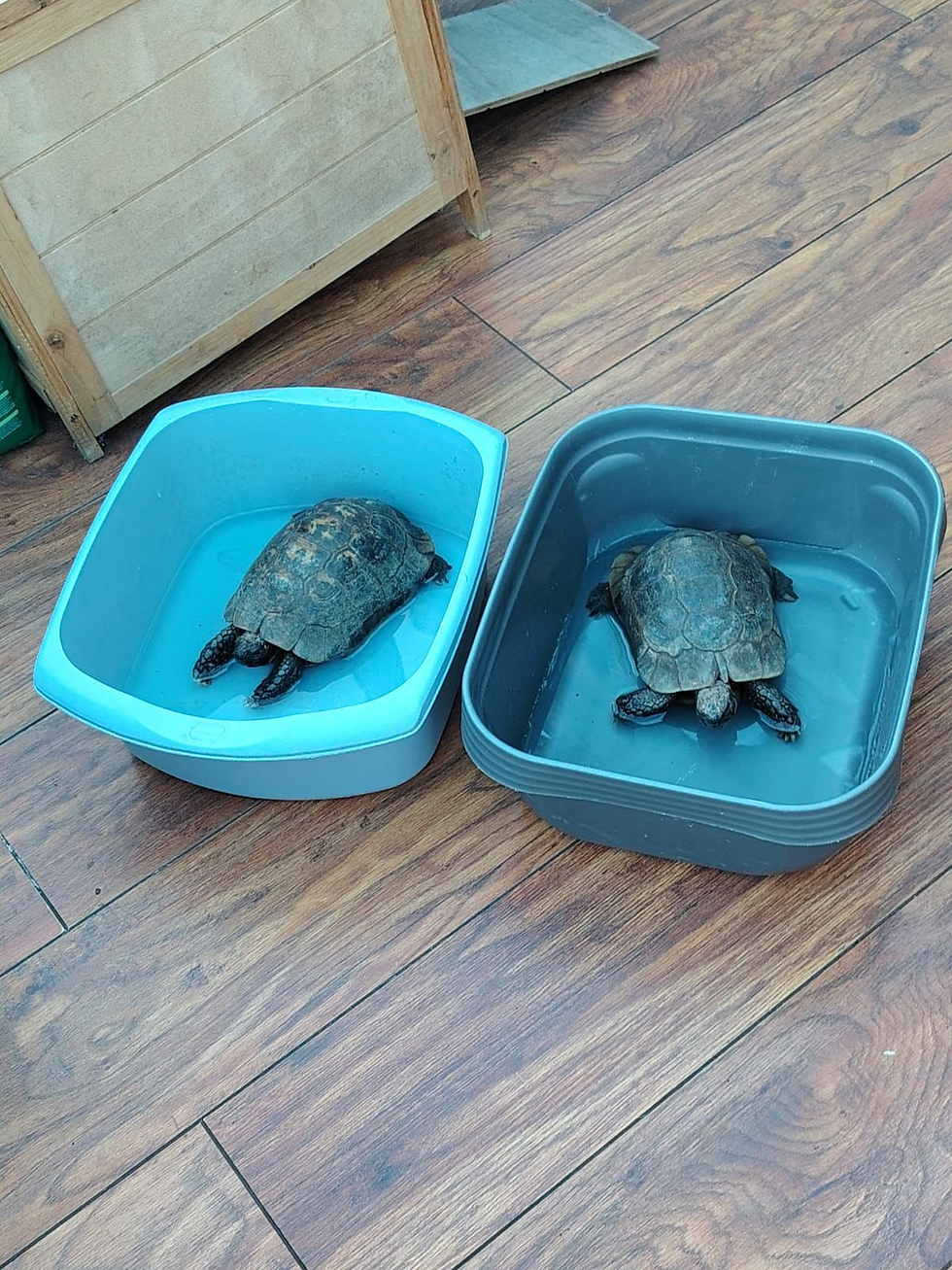
The First Bath:
Once they are stirring, the most important step is a shallow, lukewarm bath (around 25 °C). This rehydrates them and encourages them to flush their systems.
The “7-Day” Rule:
A healthy tortoise should be active and starting to eat within one week of waking up. If they haven’t touched food after 10–14 days, that’s usually the sign to check in with a vet (possible post-brumation anorexia).
Well-being Check & Weighing:
It’s important to weigh your tortoise after waking and compare it to their pre-brumation weight. A small loss is normal, but significant weight loss could indicate dehydration or other issues. This is also a good time to check their eyes, nose, shell condition, and overall activity levels.
🏠 Staying Indoors
Even though they are “awake,” UK weather in March is usually too unpredictable for them to be outside. Most keepers keep them in their indoor tortoise tables with UVB and a heat lamp until the real spring weather arrives in late April or May.
Tortoise Well-Being Check

If you’d like some extra reassurance after brumation, we offer a tortoise well-being check, where we can assess your tortoise’s condition and help ensure they’ve come through winter safely.
Here’s the link for more information and the booking form:


